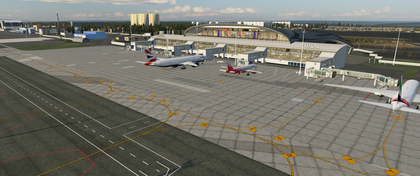
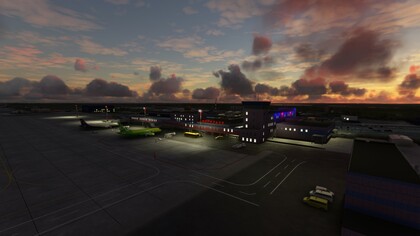
Perm Airport (Bolshoye Savino): From a Military Outpost to the Ural's Air Gateway

When travelers think of the Urals, images of rugged nature, industrial giants, and world-class ballet often come to mind. But there is another, equally important landmark of the region — Perm Airport (Bolshoye Savino). This is not just a terminal building with a control tower and a runway. It is a place where national history intertwines with modern technology, and the spirit of legendary MiG-31 fighters still lingers in the air.

Let's take a closer look behind the scenes of this aviation hub to understand what makes the main airport of the Perm region tick today — and the remarkable journey it has taken to get here.

And most importantly, now you’ll be able to fly there, because we’re presenting you with a scenario for this airport with a new terminal!

The Legacy of the "Falcons": How a Military Airfield Went Civil

The history of Bolshoye Savino began long before the first passenger flight was announced here. Since 1952, it had served as a military airfield — home to the 764th Fighter Aviation Regiment, famously nicknamed "Sokol" (Falcon).

It was from this very runway that, in 1960, MiG-19 fighters took off to intercept the famous American U-2 spy plane piloted by Francis Gary Powers. That operation became one of the most dramatic episodes of the Cold War and forever etched this airfield into global aviation history — though at a tragic cost.

The civilian era dawned in 1965. The old airport at Bakhaревka was choking on its limited capacity, and Soviet authorities made a bold decision: expand the military aerodrome to serve passenger traffic. On February 15 of that year, Bolshoye Savino was officially inaugurated as an airport of national importance. The first flight — an Ilyushin Il-18 on the Sverdlovsk–Perm–Moscow route and back — marked the beginning of its peaceful, civilian life.

From a Single Runway to Transcontinental Routes

For many years, the airport remained a modest yet vital link in the country's transport network. The real breakthrough came in 2002–2003, when the runway was extended from 2.5 to 3.2 kilometers. That was the game-changer: from then on, the airport could accept all types of aircraft without restrictions.

Today, Bolshoye Savino boasts a state-of-the-art technical infrastructure. Its Class B concrete runway, 23 cm thick, can easily handle even a heavy An-124. The airport is equipped with modern radio navigation aids, VOR/DME and ILS systems. And aviation kerosene is pumped directly here via pipeline from the Lukoil refinery, ensuring seamless refueling for any airliner — from narrow-body jets to long-haul wide-bodies.

The New Terminal and the "Skeletons in the Closet"

The most significant architectural milestone in recent years was the opening of the new terminal on November 30, 2017. The spacious glass-and-steel building, covering nearly 30,000 square meters, is the true heart of the airport. It can handle up to 2 million passengers annually, with a peak-hour capacity of nearly 1,000 travelers.

Inside, there are 20 check-in counters, 5 jet bridges, and 3 boarding galleries. It looks like an airport dream come true — but there is a catch. Due to delays in apron reconstruction, the jet bridges remained largely idle for a long time; aircraft simply could not taxi directly to the gates. The good news is that the project is finally set to be completed in the second half of 2026. Once that happens, the airport will be able to operate at its full intended capacity.

Record-Breaking Numbers: How Passenger Traffic Has Evolved

The best indicator of the airport's growth is its passenger statistics. In the early 2000s — back in 2001 — traffic was a modest 214,000 people per year. Since then, the airport has weathered crises, flight bans to Turkey and Egypt, the pandemic, and general economic turbulence.

But the true peak came in 2023. Bolshoye Savino set an all-time record, serving 1,992,852 passengers. Interestingly, nearly 90% of those travelers chose domestic routes. The top destinations were not only Moscow and St. Petersburg but also sunny Makhachkala, Vladikavkaz, as well as Murmansk and Kaliningrad.

International routes are also on the rise: passengers are increasingly flying to Yerevan, Sharm El-Sheikh, and Phuket. What's more, Bolshoye Savino is gradually becoming a transit hub — over 8,000 passengers chose it as a connecting point in 2023.

An Airport with Two Faces

One of the most unique features of Bolshoye Savino is that it remains a joint-use aerodrome even today. The legendary "Sokol" aviation group of the Russian Ministry of Defence is still based here, operating MiG-31 interceptor fighters.

Civilian airliners peacefully share the aprons with combat aircraft. This is not just a coexistence but a symbol of continuity — a quality that makes this airport truly special on Russia's aviation map.

Today, Perm International Airport (Bolshoye Savino) is a dynamically growing transport hub. Despite ongoing construction works and the lingering jet-bridge saga, it looks confidently toward the future. Judging by the record figures of 2023, residents and guests of the Urals appreciate it for its convenience and expanding route network.

And once the apron reconstruction is finally completed, the airport will shed the last remnants of its 1960s legacy — emerging as a fully modern hub worthy of a million-strong city.


26.08.2026

Kurumoch Airport in Samara has received a major upgrade
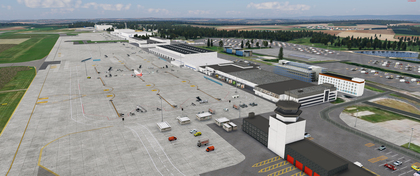
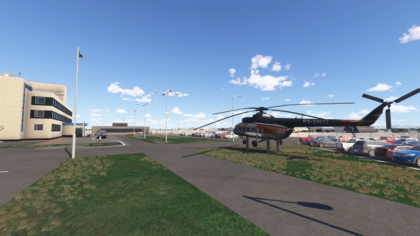
Kurumoch International Airport (IATA: KUF, ICAO: UWWW), serving Samara and Tolyatti, has announced the completion of a large-scale infrastructure upgrade. The updates affected key elements of the airport complex, which will improve passenger comfort and the efficiency of the air harbor.

What has changed?

The main innovation was a completely redesigned runway 15/33 with custom characteristics. In addition, all taxiways and aircraft parking areas have been upgraded. The developers have added many small details that improve navigation and the overall functionality of the airport area.

About Kurumoch Airport

The airport is located 35 kilometers north of Samara, near the village of Bereza, and 45 kilometers from Tolyatti. This location makes it an important transport hub for the two major cities of the Volga region. The name "Kurumoch" comes from the village of the same name, located 7 km southwest of the airport.

Kurumoch has the status of a federal airport and is one of the ten largest airports in Russia in terms of passenger traffic. In 2015, it handled more than 2.2 million passengers. The operation is carried out by JSC Kurumoch International Airport, part of the Airports of the Regions Holding (a subsidiary of the Renova Group of companies).

A distinctive feature of Kurumoch is its distance from the city — 35 kilometers, which requires passengers to plan additional travel time.

The new improvements are designed to make travel through Kurumoch even more convenient and safer for the millions of passengers who annually use the services of this important transport hub of the Volga region.

02.07.2026

We have released Frankfurt-Hahn Airport for X-Plane 12!

The new scenario reconstructs in detail the Frankfurt-Hahn Airport, a major transport hub in western Germany, located in Rhineland-Palatinate. Although located only 70 km from Koblenz, the airfield enjoys its unique history and geographical location, allowing it to land and take off even with limited visibility.

Frankfurt-Hahn is not just a modern infrastructure. This airfield has a long history. During World War II, the United States Air Force (50th Air Force) was based here. At the end of the Cold War, the base was an important American facility with 13,000 employees and F-16s. After the withdrawal of US troops, control of the base returned to the German government in 1993, and full transfers took place by 2012.

Today, Frankfurt-Hahn is a key cargo hub and base for low-cost carriers such as Ryanair, Wizzair and SunExpress. The X-Plane 12 scenario allows pilots to familiarize themselves with the operational side of this airfield, its features and capabilities.

The scenario includes a detailed model of the airfield, its surroundings, take-off and landing equipment conforming to the X-Plane 12 specification, and possibly control interface elements (up to the possible inclusion of a prototype luggage trolley, as hinted at in one of the paragraphs).

Although the airport is currently experiencing financial difficulties and competition with the main Frankfurt airport (previously, Ryanair temporarily changed routes, and major carriers changed logistics), its strategic importance remains significant. It continues to serve international flights and is an important player in logistics, especially for cargo transportation.

27.05.2026

Naryan-Mar: New scenario for MSFS2024 opens doors to the Arctic

The city of Naryan-Mar, located beyond the Arctic Circle in the Nenets Autonomous Okrug, is known for its rich history and strategic importance. Naryan-Mar Airport, a federal airport, is an important hub for civil aviation, and its details are now available to users of Microsoft Flight Simulator 2024.

The Naryan-Mar Airport scenario, developed for the latest version of the popular flight simulator, allows pilots to immerse themselves in the unique atmosphere of the Arctic city. In the scenario, users will be able to explore the airfield's infrastructure, including runways, helipads, and historical sites.

Naryan-Mar Airport has a long and interesting history. Its development began back in 1933, and the land airfield was built in 1940 during the Great Patriotic War. Today, the Class B airfield, equipped with a category II and III landing system, is used for both military and civilian aircraft.

The scenario for MSFS2024 offers not only an accurate simulation of the airfield, but also the opportunity to take off in a light aircraft or helicopter, exploring the surroundings of Naryan Mar. Users will be able to enjoy the unique mystery of the Arctic, experience the scale of the airfield and get acquainted with its history.

For residents and tourists of the Nenets Autonomous Okrug, this scenario will be another way to get to know their hometown in a virtual flight. MSFS2024 continues to delight its users with new locations, expanding geographical horizons.

Learn more about Naryan-Mar and its airport in the MSFS2024 mode!

26.05.2026

We are pleased to announce the release of an updated version of Norilsk (Alykel) airport for Microsoft Flight Simulator 2024. Now users can make virtual flights to one of the most complex and unique airports in Russia — to the far north of the Krasnoyarsk Territory, where the harsh Arctic nature meets with a powerful industrial infrastructure.
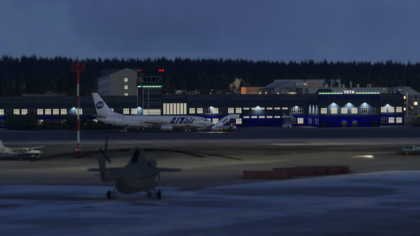
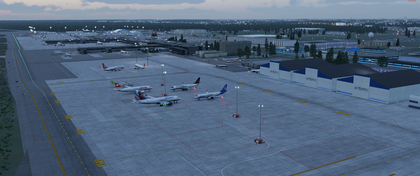
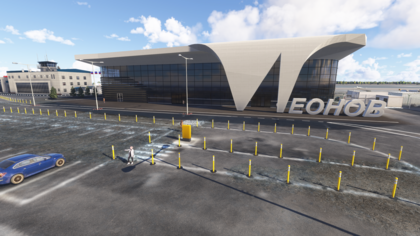
Nikolay Urvantsev Norilsk Airport (Alykel on maps) is located 35 kilometers west of the city center of Norilsk, in the south of the Taimyr Peninsula. The official name is "Norilsk (Alykel)". Despite the status of a domestic airport, it is equivalent to the conditions of an international airport due to the intersection of key air routes: Trans-Siberian and transatlantic.

14.05.2026

We are pleased to announce that Ukhta Airport (UUYH) v.1.0 has now been adapted to MSFS2024. We have completed the necessary changes to fully adapt to the new platform. All upgrades, LODs, lights, and everything else are included to ensure the most realistic gaming experience possible.

Ukhta is the airport of the city of the same name in the Komi Republic, located in the village of Dalny. Ukhta Airport is a part of Komiaviatrans JSC and operates around the clock to provide continuous passenger and aircraft services. The terminal building contains a lobby, a reference and information area, waiting rooms, a mother and child room, and a medical center. In addition, the airport offers business class passengers superior rooms and a VIP lounge.

The airport handles cargo loading and unloading and escorts passengers. The company provides aircraft with on-board catering and maintenance. The airport accepts medium-sized (up to IL-76) and small-class aircraft, as well as helicopters of all types.

Enjoy your flights

04.05.2026

Riga International Airport (ICAO: EVRA) has been updated for use in X-Plane 12. Changes have been made in almost all areas, and the airport's surroundings, as well as the airport itself, have been brought up to date.

Riga Airport is the main airport of Riga, the capital of Latvia. It is located 13 kilometers from the city center, on the territory of the Marupsky region. As the largest airport in the Baltic States in terms of cargo and passenger traffic, the airport provides direct flights to 31 countries around the world. The airport is under the jurisdiction of the Ministry of Communications of the Republic of Latvia.

Riga Airport is the base for 5 Latvian airlines: airBaltic, Raf-Avia, SmartLynx, Inversija, Vip Avia. The airport's largest airline is airBaltic.

Airport History

The airport was built in the Riga district near the village of Skulte in 1973. Before him, Spilve Airport was used as Riga's airports (from 1930 to 1986); currently it is used as an airfield, but according to the city's development plan it is planned to build up this territory; Rumbula Airport. It was founded as a military airfield after the Second World War. Since 1965, it has also served passenger flights on large aircraft, for which the runway at Spilve Airport was small. Civil flights were discontinued a year after the construction of Riga Airport. In 1978, it was closed, and military aircraft were relocated to the Lielvard airfield. Nowadays, the territory of the former airfield is occupied by the car market. As a kind of "legacy", it is worth mentioning the remaining pollution from the former fuel tanks where kerosene was stored at the airfield. Paragliding flights take place on the territory of the airfield. The complete modernization of Riga Airport and the construction of its southern part were completed in 2001 to celebrate the 800th anniversary of Riga.

In 2006, the construction of the northern part of the terminal was completed, as well as a modern hangar for aircraft maintenance and repair. In the entire history of the airport, there has never been a serious accident. In 2005, at the congress of the European Organization of the International Airports Council in Munich, Riga Airport was recognized as the best in Europe in the category of serving from one to five million passengers per year. The jury evaluates airports in terms of passenger service, aircraft, and security measures.

On October 17, 2008, work on extending the runway by 650 meters to 3.2 km was completed, and now the airport can accommodate almost all types of aircraft (the runway was commissioned on October 30). The implementation of this project cost 16.51 million lats (23.58 million euros).

In 2009, Riga International Airport was ranked among the "Top 100" airports in the world for the first time in terms of the number of passengers served on international flights during the week: according to the OAG Aviation Solutions (OAG), a research and analytical publication on the aviation industry market, it was ranked 98th, having served 66,427 passengers during the week from August 24 to August 30. international flights departing from the airport. Prospects There is a program to expand the airport for 10 years. The plan includes: the construction of a second runway, a new terminal located to the north, combined with the current one (after that, the airport will be able to accommodate up to 10 million passengers per year), the addition of additional areas to the current terminal in the parking lot (namely, the expansion of the check-in hall, new premises for shops and offices), a new a control tower, a business park around the airport, a new hotel, a new parking lot, the construction of a new tram line or railway line to the city center. It is also planned to open a Ryanair airline base. On February 9, 2010, the Latvian Government approved the project proposed by the national airline airBaltic for the construction of a new terminal. It is planned to build a terminal with an area of 58 thousand square meters, which will be able to serve up to 15 million passengers per year. The volume of investments is 92 million euros (investments will be attracted from private sector funds, for example, from TAV).

In 2012, it is planned to launch a project that provides for the renovation of the runway surface, the modernization of the lighting system and the construction of additional shunting tracks. As a result of this project, the airport's capacity and competitiveness in the European aviation market will increase. The cost will amount to 66.94 million lats (about 100 million euros).

04.05.2026

The x-flight team is pleased to announce the release of an updated version of the Kemerovo Alexey Arkhipovich Leonov International Airport (ICAO: UNEE) scenario for Microsoft Flight Simulator 2024. Version 1.0 is already available for free download from the website and on social networks!

We have carried out extensive work on the scenario to make virtual Kemerovo even closer to reality:
A complete redesign of facilities — terminals, aprons, office buildings and infrastructure elements have been detailed.;
Improvements and optimizations — fixed geometry errors, adjusted collisions, improved performance;
A fresh photo background — the outdated terrain texture has been replaced with up-to-date high-resolution satellite images.;
Up-to—date navigation data - adjusted to real-world approach and taxiing procedures;
Visual effects — added dynamic lighting, animation of ground vehicles and service equipment.

29.04.2026


About as and contacts | All airports on one page
2016 - 2026